Showing posts with label Perfume formulas. Show all posts

Wednesday, August 22, 2007

Apple formula

We went to Germany today, which is really close to where we life. It was real fun there, we went shopping and had a lovely walk in the local park and of course we ate 'pflaumenkuchen' a cake made with plums, I love that cake.

Yesterday I was experimenting with an apple formula, just for fun, and I like to share with you what I came up with so far, here it is:


Ethyl heptanoate 30
iso Amyl acetate 30
Ethyl butyrate 11
Ethyl-2-methyl butyrate 3
Orange oil 3
Linalyl acetate 2
Geraniol 1
Hexyl acetate 1
Geranyl acetate 1
Cyclohexyl butyrate 10% 6
Neroli 10% 3
Vertelione 3% 2
Benzaldehyde 1% 2


Wednesday, February 21, 2007

Accords in perfumes

In perfumery we talk about accords like in music you use the term chords. A chord in music is made from different tones but together they sound like a single tone or note because they have a harmony.

It's the same in perfumery; an accord is made of different notes that blend together so well that it's like you smell a single note, the notes that are used lose their individual identity and create a completely new, unified odor impression.

You could also compare it with painting, when you blend the two colors yellow and blue you will not create a yellow/blue color but a complete new color: green. You can't identify the yellow and blue anymore. The same it is with an accord in perfume, these single notes are so well balanced together that you can't identify them anymore together they created a complete new note.

When we say that a perfume has a strong accord we mean that it is build upon notes that harmonise together and smell complete, they 'work' together. The perfume has character and the notes are there for a reason it doesn't smell confusing it's like the perfume couldn't be made on another way.

Accords have mostly just a couple of notes, like 5 or 7 notes but they could have also much more. These notes are combined together in a way that the result smells complete, this accord is the skeleton of the perfume the perfume is based and build around this accord. Than the perfumer starts to add notes in real tiny amounts to complete the perfume, maybe to enhance some notes or to tone down some notes. This process takes a lot of time and patience of the creator.

There are many types of accords like Chypre, Fougere etc Here are some of them:


Ambre accord
Has beside ambernotes also vanilla, cinnamonlike,
spicy, dry fruitlike aspects. Together with balsamic
notes like: Benzoin, Tolu and Labdanum.


Ambrein accord
Bergamot, Vanilla or Vannilin, Coumarine and Civet
makes the Ambrein accord, together with balsamic
notes like Benzoin, Opopanax, Tolu, Labdanum. Mostly
combined with wood and rose notes.
Typical perfumes made of the ambrein accord are
Shalimar, Must de Cartier and Obsession


Chypre
Chypre has a harmony between the freshness of bergamot and the
intense fragrance of oak moss. Mostly combined with roses and
jasmine. The base contains beside the oak moss also patchouli,
cedar and labdanum. Chypre was the name of a perfume made by
coty in 1917. It does not exist anymore but many chypre perfumes
are inspired by it.

An example of a Chypre formula:


Bergamot 15
Sandalwood 8
Vetiver 6
oakmoss 5
Rose 6
Jasmin 5
Gamma Methyl Ionone 3
Patchouli 5
Musk ketone 3
Clary sage 2
Neroli 2


Fougere
Fougere is a type of perfume that has lavender,
patchouli, oak moss and the fragrance of hay from
coumarine, Tonka bean or Hay absolute. In French Fougere means fern.
In 1882 Houbigant made Fougere Royal. The Fougeres
are related to that perfume. Fougere based perfumes
are mostly men perfumes.

Mellis accord
The Mellis accord has Benzyl salicylate,
Eugenol combined with Patchouli, Hydroxycitronellal,
spices, woodnotes and Coumarine together with balsamic notes.
Typical Mellis perfumes are Youth Dew, Opium and Coco Chanel.

There are many more accords and sometimes two or more accords are blended together. Perfumers use these accords that already been found by other perfumers to create complete new accords by adding new or unexpected materials to these accords. Also new accords are still discovered.

Below an example how different notes can create a whole new note where you don't smell the single notes anymore.

Just take these notes, combine them (only in the right proportions)and ...... scroll down to the bottom and see the result


Butter


+


Fresh grass


+


Ripe apples


+

Cotton candy


=

Strawberry

Tuesday, September 12, 2006

Traditional Eau de Cologne formula

I would like to give you a traditional formula of Eau de Cologne one of the oldest perfumes that still exist. I always have a bottle beside my bed and use it when I have a headache. It's refreshing and uplifting.

Fantasy colognes are usually modifications of standard Eau de Cologne with floral or other notes to impart special character to the fragrance, small dosages of essential oils such as geranium, rose, ylang ylang, patchouli and vetivert may be used for this purpose. Also interesting is omitting some oils like lavender or rosemary and introducing an aroma chemical such as Lilial, Anisaldehyde, iso amyl salicylate etc. To compare you can make a completely synthetic Eau de Cologne.


Here is the formula:


Bergamot oil 27
Lemon oil Sicilian 20
Sweet orange oil 16
Neroli oil 12
Lavender oil French 6
Rosemary oil Spanish 4
Thyme oil white 1
Clove bud oil 1
Petitgrain oil 3
Clary sage oil 2
Benzoin resinoid, siam 1

Tuesday, August 22, 2006

Study of the classics part 1 +

Yesterday I posted my formula for L'air du Temps and thought it would be nice to give some alternatives for the given components for someone that doesn't have all these components, and want to use essential oils and absolutes. So here is the formula where I wrote down some alternatives behind the original components, they don't smell exactly the same but have some similarity:

Benzyl salicylate 6,7 (ylang ylang)
Eugenol 1,5 (clove)
Methyl Diantilis 0,5 (carnation)
Ylang Ylang 1
Methyl Ionone 4,4 (orris root)
Vertofix 2 (vetiver)
Sandalwood 1
Styrallyl acetate 0,2 (gardenia, jasmine)
Phenylethylalcohol 2 (rose)
Hydroxycitronellal 4,4 (smells like lilly of the Valley there is no essential oil of this flower)
Benzyl acetate 0,4 (jasmine, ylang)
Bergamot 2,4
Linalool 1 (rosewood)
Linalyl acetate 3 (bergamot, neroli, lavender)
Aldehyde C11 undecylenic 0,1 (orange or bergamot)
Vanillin 0,05 (vanilla)
Heliotropin 0,2 (smells like vanilla and almond,maybe a benzoin oil would work here)
Iris substitute Firmenich 0,05 (iris)
Exaltolide 0,15 (a musky fragrance with some similarity to angelica root oil)
Muscenone Delta 0,15 (a musky fragrance that could be replaced by Ambrette Seed Oil)
Jasmin etoile(givaudan) 0,2 (jasmine)

Monday, August 21, 2006

Study of the classics part 1

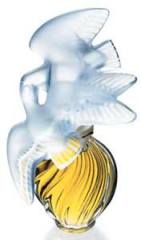
Last weekend I spent my days on studying the classic perfumes. I once read in a book that you can learn from the classic perfumes. I think that makes sense, it gives me a change to try to understand what the perfumer thought while creating the perfume why he or she used certain notes. So this weekend I started with two classicals. L'air du Temps and Shalimar. Here is the Simple formula I made for a perfume with a L'air du Temps kind of fragrance:


Benzyl salicylate 6,7
Eugenol* 1,5
Methyl Diantilis** 0,5
Ylang Ylang 1
Methyl Ionone 4,4
Vertofix 2
Sandalwood 1
Styrallyl acetate 0,2
Phenylethyl
alcohol 2
Hydroxycitronellal 4,4
Benzyl acetate 0,4
Bergamot 2,4
Linalool 1
Linalyl acetate 3
Aldehyde C11
undecylenic 0,1
Vanillin 0,05
Heliotropin 0,2
Iris substitute Firmenich 0,05
Exaltolide*** 0,15
Muscenone Delta*** 0,15
Jasmin etoile(givaudan) 0,2

*could be replaced by clove oil
** I used this instead of Iso eugenol because it smell similar but it's not restricted by IFRA
***Both musk notes, the original has Musk ketone but since it's restricted I don't like to use it

The perfume has some similarity to L'air du Temps but is lighter and more flowery, the original has more dark sweet notes maybe from benzoin or patchouli.

Now I will experiment with this accord. For example replace the Benzyl salicylate by Amyl salicylate or cis 3 hexenyl salicylate and study the difference. I could change the Hydroxycitronellal for Lyral or the Methyl Ionone by Beta ionone or Alpha ionone. I could even try to add a new note, maybe a green note like Galbanum or a peach note like Aldehyde C14 or Nectaryl. Or leaving a note out like the rose notes like Phenylethyl alcohol. Most perfumes are inspired by the classics, by using another interpretation of the classics there could be created a whole new perfume. Mitsouko by Guerlain was based on the Chypre accord but by adding a peach note from the Aldehyde C14 it became a complete different perfume.

Friday, July 28, 2006

Exotic bath

The weather is real hot so I have a lovely blend for bath or shower. It's full of exotic oils, wonderful for the summer:

Exotic bath or shower blend


Ylang Ylang 8 drops
Litsea 1 drop
Jasmin 2 drops
Tonka bean 3 drops
Tuberose 2 drops
Orange 7 drops
Blend these essential oils in 4 table spoons honey and put it in the bath water, or blend them in a neutral showergel.

Sunday, July 16, 2006

Sweet Pea


Oh don't you love the smell of Sweet pea? I found a formula of it in an old book:

Sweet Pea

Benzylidenaceton 60 gram
Phenyletyl acetate 15 gram
Heliotropine 60 gram
Vanilline 15 gram
Terpineol 200 gram
Hydroxycitronellal 75 gram
Phenylacetaldehyde 75 gram
Jasmin base 35 gram
Rose bulgarian 10 gram
Neroli base 50 gram
Benzyl acetate 20 gram
Tolu balsam 65 gram
Cananga oil Java 25 gram
Iso Eugenol 5 gram
Eugenol 2 gram

From the book: Handbuch der gesamten parfumerie und kosmetik.
Dr. Fred Winter 1942
The picture is from www.welchstudio.com

Wednesday, June 28, 2006

Lavender recipe's

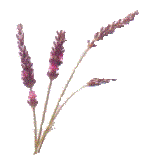
The lavender is growing right now so I like to give you some recipe's. First a cream cheese pie with lavender, you have to try this one it's to die for:

Cream cheese pie with lavender honey

Tea biscuit's 250 grams
Melted butter 75 grams
3 Tables spoons fresh lavender wrapped in a cotton bag
Lavender honey 180 grams
whipped cream 300 ml
cream cheese 250 grams

And this is how you make it:
Crumble the biscuits and put the melted butter on it. Put it in a backingvorm and push it a bit flat with the back of a spoon. Place it in the refrigerator.
Mix 2 and a half tablespoons boiled water with 2 tea spoons of the lavender honey and hang the cotton bag with the lavender in it for 15 minutes.
Put in another bowl the cream cheese and the rest of the lavender honey. Mix it well until it's smooth.
whip the whipped cream and put it carefully through the cream cheese put it on the biscuits and let it stand for three to four hours in the refrigerator.

Here an old recipe of lavender water:

Lavender water


Lavender 45 drops
Rose Bulgaria 1 drop
Lemon 5 drops
Clove 5 drops
Petit Grain 5 drops
Neroli 1 drop
Alcohol 96 % 40 ml
Rosewater 10 ml.


A recipe of a lavender air freshener:

Blue wonder


Lavender 20 drops
Lemon 10 drops
Bergamot 10 drops
Lime 5 drops
Grapefruit 5 drops
Blend these oils with 10 ml alcohol 70 % and 30 ml purified water, put it in a spray bottle and shake well before use.

Saturday, May 13, 2006

Paradise of lovely fragances

Testing testing and testing that is how I spend the days right now. It's like paradise smelling al these lovely fragrances. I received some materials from IFF and have to get to know all these new materials. It's like you meet a new person, you don't know the person accept you first impression, but to really know a person you have to spent time with him and know how that person will react in different circumstances. The same thing with the perfume materials. You have to spent time with them, wearing it on your skin, smell it on a smelling blotter, dilute it and so on. But then you only know the material on his own, most important is how it will react with other materials. One of the materials I"ve got from IFF is Cashmeran it has peppery soft musky notes, I tried it with Clove oil and am surprised how it enhanced the spicy smell of the Clove. I tried it in my Magnolia perfume as well and it's lovely, it doesn't ad the stayingpower that I was looking for but it's real nice with this perfume, I think I will keep it in it. I'm also working on a Fougere base, Fougere is a type of perfume that has lavender, patchouli, oak moss and the fragrance of hay from coumarine or Tonka bean. In French Fougere means vern. In 1882 Houbigant launched Fougere Royal made by the perfumer Paul Parquet . The Fougeres are related to that perfume. Fougere based perfumes are mostly men perfumes. Here is a simple basic Fougere base:

Lavender 14
Bergamot 8
Coumarin 12
Rose 5
Jasmin 4
Patchouli 2
Vetiver 10
Geranium 2
Iso-Amyl Salicylate 3

If you don't have Coumarin you could use Tonka bean oil that contain a lot of Coumarin.
I tried it with Basil oil what makes the topnotes real fresh, Clary sage is used also a lot, but some how I don't like that scent. Maybe I need to learn how to use that oil. I tried Vertofix in it and that is real nice, Vertofix has a woody note like vetiver and a leathery scent. I think a fruity or green note will be nice in it too, a note of green apple perhaps.

Tuesday, April 04, 2006

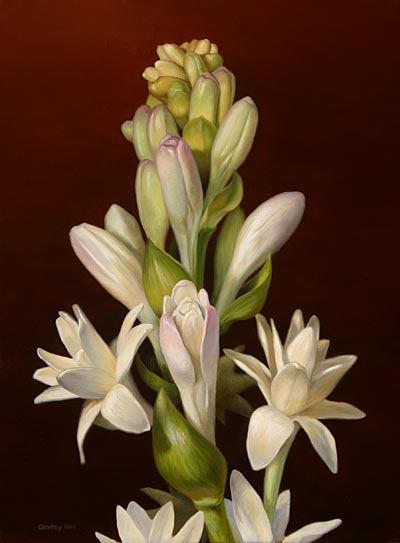
Tuberose

You love it or you hate it, and I just love it. Tuberose or Polianthes tuberosa has a complex scent that reminds me a bit of Jasmine, Narcissus, Ylang Ylang and Gardenia but has more layers. It starts with green notes reminding of sappy green leaves. But it has also some sweet honeylike notes, fatty sultry notes, spicy notes reminding of Clove and even a note that smells like coconut. The fragrance is sultry, sensual, sweet, heady, heavy and intoxicating. Originally the Tuberose comes from Mexico but now it grows in France, India, Marocco and Egypt. It has fragrant waxy white flowers that gives their fragrance at night. A concrete and absolute is extracted by solvent extraction from the fresh flowers, picked before the petals opened. The absolute is more expensive than his weight in gold. I reed once that the smell has similar notes like the scent of the vulva of a woman and even the smell of sweat. The important components of Tuberose are: Methylsalicylat, Methylanthranilate, Methyl benzoate, Benzyl benzoate, Eugenol, Geraniol, Nerol, Farnesol and Benzyl alcohol. I have an old German book of Fred Winter(1942) where he gives a formula of a Tuberose scent:

Methylanthranilat 2 gram
Methylsalicylat 8 gram
Methyllaurinat 6 gram
Methylnonylacetaldehyde 0,1 gram
Benzyl acetaat 1,5 gram
Jasmine artificial 1,5 gram
Coumarin 1,5 gram
Citral 1 gram
Peru balsam 2 gram
Benzyl alcohol 20 gram
Tubrose absolu 10 gram
Jasmine absolu 3 gram
Cassie absolu 1 gram
Ylang ylang 0,5 gram

I like to combine the Tuberose with Oakmoss, Verbena, Jasmine, Orangeblossom, Tolu balsam, Ylang Ylang, Benzoin, Rose, Palmarosa, Rosewood and Mimosa.

The beautiful painting of the Tuberose is from Kitgentry.com