Showing posts with label The world of a hobby perfumer. Show all posts

Sunday, March 02, 2008

Beethoven


Finally I had a long weekend, I had 4 days off! I looked forward to it the whole week, but when it finally was there, I got sick...... I had a terrible cold and was so sleepy that I could sleep for hours, I only watched some TV or sat behind my PC a bit. Not very exciting is it? But today I feel a bit better and even worked on a perfume again. I worked on my perfume that I sent in for the first 'Perfume Swap' that we did on my Perfume making group at Yahoo. It is a perfume based on animalic notes, with oudh and other woods, honey, rose and jasmine. I added less cedarwood and a lot more sandalwood. I can't smell a lot right now because of the cold I have, but I will leave it like it is and smell it when I have a 'better' nose.


That makes me think......


What if a perfumer can't smell anymore? Is it possible to create perfumes anyway? I think so, if I recall correctly, there was a perfumer who couldn't smell anymore, but still created perfumes, I don't remember who it was. Well, if you think of the fact that Beethoven was deaf when he composed music, a perfumer could only by remembering the smell and the combination of materials, compose a perfume too. Without actually smelling the result, the composing would be done in his memory, in his mind.

Wednesday, February 27, 2008

Far away, yet so close


This morning I was reading the post on Andy Tauer's blog. He wrote about how the Internet brings so many people close to each other. And I can't agree more, it's amazing how many wonderful, beautiful, interesting, inspiring, creative, lovely, sweet, caring people I've met through Internet. Internet gives us the chance to meet people with the same interest from all over the world. How would it be if the little 'home perfumers' were living in a time when there was no Internet? We would probably be sitting in our home creating perfume and could only share it with a few people who would live close to us. Now thanks to the Internet, we can share it with people from far away places, far away but yet so close. I was surprised to read my own name in his post, Andy wrote: "The world villagers are waiting for yours, Jenny!" I'm working on it dear Andy, I'm working on it.......

Sunday, January 27, 2008

Scent and memory

It's strange that sometimes when we smell something, we can't find the right words to describe what it is. We have the feeling that we should know what it is, because it smells familiar, but if we search in our brain to find the answer the answer comes slowly or not at all. I guess we all have experienced this once, I experience this a lot of times, because I work with a lot of scents. Sometimes I smell a material and the only thing that my mind tells me about it is that it smells earthy, floral or fruity. But it takes more time to search in my mind for a memory where I smelled this scent before to finally get the 'aha' moment. I once had this experience when I smelled the fragrance material: Butyl Quinoline Secondary, I recognized the smell of soil and earth, but I knew that I smelled a more specific scent. It took a while before I recognized the smell of red beets which also smells like soil and earth but was a more specific description of what the materials smells like.

Smell for the most part aggravates the lymbic system and the right side of our brain, where Episodic connections are received. Our right hemisphere is associated with memory of events, times, places and emotions. It looks at wholes not at parts of certain things. It's subjective, uses feeling and it's creative.

We use our left hemisphere of our brain to recognize and rationalize things Here are the Semantic connections received. We use it for meaning, analyzing, understanding, knowledge and language. It sub-divides and reconnect things. It looks at parts and it's objective. It uses logic.

Of course it's not as simple as this, there are grey areas in this field, but it's a rough explanation of how our right and left side of the brain works.

These two parts of our brains communicate with each other. Our right hemisphere send information to our left hemisphere, where the received information will be 'labeled', 'packaged' and analyzed. If we mostly use our right hemisphere if we smell something, then it's logical that it's hard to describe in words what it is, we need our left hemisphere to help us with it.

For example, if we are in traffic. Our right side of the brain tells us that an object which is going fast, that it is coming close to us. It doesn't tell us what exactly is coming close to us, but it's something that is going fast. Our left side of the brain however, recognize the object and tells us that it's a car and explains to us that we have to be careful. The same with scent, our right side of the brain 'looks' at things as a whole. So it will provide us with rough information such as; it smells floral, earthy, fruity. The left side of our brain will look at it as in parts such as; it smells like jasmine or it smells like peach.

A perfumer needs to recognize scents and needs to train his or her brain to do so. Using words to give a name to a certain scent is very useful. If something is named, it will be more recognizable. If people have to distinguish different nuances of colors for example, it will help if they know the names of the colors, to concentrate more on these colors, to distinguish them from the other colors. If they are confronted with these color nuances and their names a couple of times, their recognition of these nuances are getting better and better over time. The same with scents. It helps the brain to receive more than one 'code', in this case smell. The trick is to give your memory more than one way of remembering. You can do this by using more than one sense, (touch, sight, hearing, taste and smell).

Perfumers do not only have to recognize the scent of one single component, they sometimes need to recognize this single component in a blend as well. Some perfumers can, if they smell a perfume, recognize many of the components of this fragrance. A trick to recognize some of the components is called 'smelling in patterns'. Let me first give another example to explain it a bit more:

Most people can only remember 7 numbers in a random order, for example the numbers:

1261941

It's getting more difficult to remember 14 numbers in a random order like:

12619417211969

But if we would group the numbers in meaningful groups like important dates of events like:

12.6.1941 (bombing on Pearl Harbor) or
7.21.1969 (the first landing on the moon)

We remember the numbers a lot easier. The same with recognizing components in fragrances. If the perfumer can group some single components and recognize these groups, it will be much easier to recognize the different components. The perfumer can group these components if he or she knows how certain combinations of single components do smell. For example, if the perfumer recognize a Fougere note (perfume family) in the fragrance, he or she knows that the Fougere has to have Amyl Salicylate, Coumarin, Lavender and Oakmoss. Once this group of components is recognized, the perfumer can put this group 'aside' in his mind, and smell around this group.

It's said that the right side of the brain is dominant with creative people, here is a test to find how creative you are.

I found something incredible at YouTube. Some people see the girl turn clockwise and some see her turn counter-clockwise, some people even don't see her turn but see her swing from left to right. I had to try it a couple of times before I could 'make' the girl turn every way around and let her swing from left to right. They say that if you see the girl turn counter-clockwise you use more of your left brain(analytical) and if you see her turn clockwise you use more of your right brain(creative). The first time I watched the video, I saw the girl turn counter-clockwise and at the end of the video I saw her turn clockwise. Strange that I see her turn counter-clockwise what means that I use more of my left side of the brain, while I always am creative. I should have seen her turn clockwise, but I didn't. I wonder if it's because I watched it as an analytical experience and forced my left brain to give attention. I don't know how much this test proofs. Which direction do you see the girl move? If you like to know how to let her move all kinds of directions I will let you know.


Sunday, October 14, 2007

How I create perfume

Sometimes people ask me, what it is that I do, how I make perfume. If I tell them that perfume is alcohol with aromatic materials, a lot of times I hear the same story. They tell me that when they were little they put roses in water trying to create perfume. They tried to create rose water, something I did when I was little as well. Although the product that is sold by the name 'rose water' is not made by soaking roses in water, but a side product of the distillation of roses. The picture that some people have of what I do is that I work with plants like roses, lavender, clove etc and soak them in oil or alcohol to create perfume. Of course sometimes I did things like that, but this is not the same as creating a perfume, this is making tinctures or macerates. I sometimes used a tincture, but mostly they are not stable enough. When I tell them I use essential oils and absolutes, I see that it's sometimes confused by some people with plants macerated in an oil like almond oil. An essential oil is a concentrated oil which is distilled from the plant, many kilos are necessary to obtain a little bit of this concentrated oil, these oils are volatile, not the same as almond oil, jojoba or coconut oil etc. I've seen many times when I show a bottle of an essential oil that they want to put the oil straight on their skin, as it was a perfume based on an oil like almond oil. While many essential oils can't be worn pure on the skin, they are so concentrated that it can irritate the skin. I also explain that these oils and absolutes have all kinds of different molecules all having different smells. That a rose doesn't contain one molecule that smells like rose, but has a combination of hundreds of different molecules, all having their own specific odor, which all combined create the scent of rose. I explain that I not only work with these combined molecules like an essential oil or absolute, but with single molecules as well. These are from natural sources or man made. Which I for example can use to build my own rose, jasmine or other scents.

Of course there are a lot of people who do know a lot about perfume, especially the perfumistas on the Internet. I'm amazed how much they know about it. For example I love to read the blog Bois de Jasmin by Victoria she writes wonderful interesting posts about perfume materials. She loves perfumes, but she is also interested in how it's made, and wants to know more about the materials that is used in perfume. But a lot more people only buy perfumes and never thought about how it's actually made, it's fun to hear from them how they think perfume is made. Mostly they are surprised when they hear how it's made.


On the left you can see my 'perfume organ'. I created a special room to create my perfumes and to store my materials. On the photo you see cabinets that I hang on the wall containing bottles with droppers which are filled with diluted materials. I keep the bigger bottles of the pure materials in a closet protected from the sun. For me it's always a bit hard to describe in only a few words what it is that I do. It's not the same as blending some oils together and the perfume is ready. I don't line up a rose, jasmine, sandal, lemon oil and mix them, and my perfume is finished. It's more complicated than that. Rose, Jasmine or lemon oil all have their own mix of molecules, basically they are a complete perfume on their own, where molecules are combined in a certain way. Some of the molecules of the rose could be found in the lemon as well and some of the molecules of the lemon can be found in the jasmine as well etc. I work with these oils which are combinations of molecules, but I also work with single molecules which I can use to bring out a certain element of a scent. With these single molecules I can create bridges between some stages of the perfume, I can hide some unwanted harsh or other unpleasant molecules. I can use these single molecules to add a similar smelling molecule that normally only occurs in the base notes to bring out to the top notes as well and of course the other way around. I can create a rose that smells more fresh, dewy or more honey like etc, by adding one or more materials made of one single molecule. Basically I work on the different single pieces of the perfume, the molecules, I put some single molecules apart and work on those to bring them out more, to smooth them, to hide some of them or to modify them. I'm not only working with molecules that are grouped/combined in a certain scent, like rose, jasmine etc but I also divide or break down these groups of molecules into single molecules. That means I have to concentrate on hundreds of single molecules. All having their own character. Below is an example of a perfume, I wrote the notes down in a pyramid. In the top of the pyramid you can see which top notes are used, in the middle the heart notes and at the bottom you can see the base notes.

This perfume above seems only based on some oils, which all are compositions of different molecules, which are combined to create a perfume. This phase of creating is the most fun and easy part, but it's only a rough basic of the perfume, it's not finished yet. I still have to work on the different materials to create a perfume that is well structured. The perfume below is an example on how these notes are combined with single molecules to create a nice structure.


I know it looks a bit messy and I didn't have enough space to add more notes. But this is a rough idea of what I do. I try to blend notes in a way that they all combine well together, I 'glue' some notes together, create more silage, bring out some elements that I like by adding more of these single molecules etc. This phase of creating perfumes is the hardest but the most interesting phase, it's interesting and feels satisfying to finish the perfume and try to make it perfect. I have to find out the evaporation rates of the molecules and combine them with elements that has similar evaporation rates to create a logical way of evaporation. I have to study the perfume to find out if there is not an element that is too dominant, which I maybe have to smooth or hide with other molecules. Or maybe I like to bring out an element and will add more of this molecule etc.

The most fun part is to find out what kind of effect some materials have upon each other. It's amazing how one material can change if I add other materials. It's not so that I'm always sitting behind my desk and blend, mostly I'm studying the materials on scent strips or on my skin, I combine these strips and try to find out how they combine with each other. The ideas of my perfumes are starting in my head, I'm always dreaming about perfumes, I think about it most part of the day, it's something I do automatically and mostly I'm unaware of the fact that I'm analyzing everything that I smell. I imagine how I can translate some feelings or wonderful experiences into a perfume. I'm always paying attention on things that I smell around me, I store all these information in my head and compare these with the materials and combinations that I've studied. It's a dreamy fantasy world, I try to recreate a fantasy and translate it into a perfume.

I have a deep respect for perfumers that really studied their profession, perfumers that work for popular perfume houses studied perfumery for 10 years!!! Now that I've learned so much about perfumery I understand that these perfumers had to study a lot of things before they became a perfumer. Things I didn't think of before, simply because I didn't know or realized what perfumery really meant. I always say, 'the more you know, the more you realize that you basically know nothing at all'. If you don't know enough about something, you can underestimate the whole thing, and compare yourself to someone who really knows everything about it. You put yourself on the same level of someone who studied this, I would call that arrogant and ignorant. I would like the people who put themselves on the same level as professional perfumers to take a real perfumery exam and see if they will pass. I know I will never reach that level, I can't compare myself to these perfumers. I create perfumes for 8 years or so now, I've learned from books, the Internet, by communicating with the members of my Perfume making group at Yahoo and by experimenting and again more experimenting, that's not the same as to study the profession at a high level. There was no teacher that forced me to learn things that I didn't feel like, but had to know to become a perfumer. I'm sure I skipped some parts of perfumery that I still have to learn, but I do my best and try to learn.


Sunday, September 23, 2007

Monclin

I heard about the Monclin before, it sounded fascinating, but wasn't doing much with the information. The first time that I read about it was on Luca Turin's blog. You can see two Monclin's on the photo above, they look like two wine glasses putting upside down with a little hole in it, where a scent strip is pushed through. It was invented by the perfume house Jean Patou.


A couple of days ago, I was studying some of my materials that I put on scent strips, I was searching for a nice combination of these materials to find a new accord. I grabbed a Bordeaux wine glass and put a couple of these scent strips in it, and smelled...... Wow, this was an unbelievable experience. This experience is so totally different than smelling just straight from the scent strips. The smell is much more concentrated, more lively and full, it's like you smell in 3D. I play with my own 'Monclin' all the time now. I start with one scent strip dipped in a material and than add another one to it, and smell the combination of these two. I can add as many scent strips as I like. I like to do the whole procedure backwards as well, by taking away a scent strip and smell how much difference this makes, I can smell the difference in an instant now, I keep smelling while I take the strip away.


Here you can read how you can create your own Monclin.

Thursday, June 28, 2007

Follow my nose

Yesterday me, my husband and a friend of us, went to an orchid farm. It's an orchid farm but also a tropical garden that you can visit it has waterfalls, little houses, bridges etc, and of course lots of orchids. I was curious to find fragrant orchids. So the first thing I did when we came into the tropical garden, was sticking my nose into an orchid. A bit of a disappointment because I couldn't smell a thing. I wanted to smell all the flowers, so I followed my nose. I saw people looking in a funny way at me, but they started all to smell the flowers as well. The first orchid I found that had a scent had a faint odor. A bit sweet, soft not real spectacular. The photo I made of this orchid failed. It had a lot of real tiny yellow/orange flowers on the same branch, hanging down from a tree.

But the most fragrant I could find was an orchid that had the appearance of a big violet, and that was the common name of it as well, it's called 'Violet orchid'. The official name is Miltonia named after Lord Milton. I smelled the white version of this orchid first, because they were the first I found. The smell was fresh floral a bit lemony and a bit spicy, not at all like the smell of violet. When we walked a bit further I found more Miltonia's the white version but also Miltonia's in other colors. This time the white version didn't smell so strong as the flowers that I found before. I think it depends on where they stand.

Next to these white flowers there were also Miltonia's with a deep dark purple color, these had a faint scent like chocolate. Maybe if they were standing in another spot or when I smelled them at another time of the day they would smell stronger, I don't know. I know that many orchids are fragrant in the night. It was great to see and smell so many different orchids, there are so many of them, also many hybrids. When you like to see how a 'new born' orchid would look like if two different species would 'mate' click here

Monday, June 25, 2007

A palette of scents

A mistake I made when I first wanted to create perfume, that was in 1998 or 1999 I think, was that I used too many materials, all in small and about the same amount. So too much of everything basically. None of the materials were standing out, it was more like 1 to 3 drops of all the materials and than maybe 10 materials at once. When you think about how many compounds essential oils or absolutes have; for example a rose absolute, has at least about 350 aromatic molecules, you will understand that when you use all kinds of essential oils or absolutes you will end up with something like 1000 or more aromatic molecules in your creation. Of course some of them will share some of the same aromatic molecules, but all together it's too much of all these smelly molecules at once, it doesn't make sense to your nose anymore. I compare it with painting, when you use too many colors on one little spot you get a brown dull color. Let me visualise it:

I used a small frame and painted with a big brush a big spot of red paint that almost fill the whole frame. Not bad.


Than I added a yellow spot on top of the red spot I painted before. Hmm still not bad.


Now I used the color blue on top of the red and yellow spot. And the color changed into something purple. Not bad either. But this is not what I had in mind, where is the red and yellow color?

But I don't stop here and add a green color on top of all the other colors. The color turns brown and dull. Imagine what kind of color it will turn out to be when I use more colors, all at the same amount and all at the same spot. You don't see any of the other colors anymore.

In perfumery you have to avoid to add too many things in the same amounts. You have to create the basic scent, the skeleton so to say, you could also say the background maybe, the scent that will go trough the whole fragrance. You will smell different notes as well but still will recognize the basic smell. It's something that will guide you trough the whole fragrance experiment of the perfume.

So this time I will use a bigger frame to start with:

Than I add the basic colors, the basic scents I want to use for my creation, something like a background that always can be seen (smelled) through the whole fragrance picture of my creation. Like I did here with the basics green for the grass, blue for the sky and a little less, but still present yellow for the sun:

So far the basic of the painting, uhm I mean fragrance. Now I'm adding some smaller amounts of other colors, I mean notes:

You can still see the basic or the background of the painting, like you still will smell the basic notes in your creation. Finally I add some other colors, not big spots but enough to be noticed.

So some colors, notes, will act as the basic and some colors, notes will act as little spots to give the painting, perfume, more contrast or accents. Sorry, but I can't paint, I wish! I hope that this visual made it more clear on how to 'paint' a perfume.

Sunday, June 17, 2007

Mint, apple and lemon

Here in the Netherlands we had some rainy days lately, but gladly it's dry in between as well. Last night we had a birthday party of my girlfriend and the whole night it was dry so we could sit outside in the garden. We sat outside until half past 4 in the night, no need to tell it was a great party! This morning I walked in my garden and was not only smelling the flowers that are blooming but smelled the leaves of some plants as well, I crush them between my fingers so the essential oils will be released. We have peppermint plants in the garden, the Latin name of this peppermint is Mentha suaveolens, we use the leaves in our tea. The smell is soft minty with a green apple note. It's amazing how many different species of mint plants there are, there are mints that smells like grapefruit, chocolate, pineapple and many more variates. Here you can read about some species and their smells. On real warm days I like to make a refreshing lemon drink. I use water. sugar, Lemon or Lime and peppermint leaves, which I leave in the drink for decoration and taste, with a lot of ice, this drink is wonderful on hot days. I have essential oils of the peppermint as well, one oil is from the normal peppermint and the other is an essential oil from the Nana peppermint, Mentha Spicata, a mint that Arabic people use in their tea.

Another plant in my garden with aromatic leaves is Melissa officinalis (Lemon Balm) when you crush the leaves of this plant between your fingers it smells like Lime, I've heard once that when you drink a tea of this plant everyday, you will have a long healthy life. There are many more plants with aromatic leaves in my garden, like the Agastache Foeniculum (Anise Hyssop) these leaves smells like licorice with a hint of mint as well. The leaves of the geranium smells heavenly green rosy. I like to sniff everything I even dig up the violet flowers to smell their roots which smell a bit like Orris root.

Well have to go, it's Father's Day and I made a fragrance for my father to give to him as a present, I hope he likes it.

Have a nice Father's Day!

Sunday, June 03, 2007

Peony

The flowers around me are so inspiring these days. I can't get enough of smelling all these lovely fragrances. A lot of flowers are blooming in my garden and I can't resist to smell them every time I pass by them. When I smell them I wonder in my head what it is that makes these flowers smell so great. Last week my mother gave me beautiful flowers of Peony out of her garden they are white with little purple red spots on them. The funny thing is that the petals, that are soft like velvet, have a heart shape. The smell of these flowers are incredible it's soft, clean and fresh at the same time. It doesn't smell like roses, although it has some similarities, the smell of a rose is deeper. I took the vase with the flowers with me outside and went to my garden sitting at the table. I took also some of my aroma chemicals with me outside, and smelled the material that I thought would be in it and compared the smell of it with the flowers, to be sure if it is really in it or not.

I can smell Citronellol a component that also occurs in rose, Citronellol has a rosy but also a bit of a citrus kind of odor. I also detect a Linalool note, Linalool occurs naturally in Lavender, Rose wood and many other plants and flowers. Linalool has a soft floral and a bit of a woody odor. Peony also has a little bit of a green note, what I think can be coming from Aldehyde Lauric C12, which has a clean fresh green smell. There is no doubt that it also contains some Geraniol which also occurs in rose and so many other flowers and even fruits. The smell of this flower also does remind me a bit of Honeysuckle somehow, so I guess that it also contains some Geranyl Acetate. I created my own Peony base based on this experiment and the similarity with the the smell of the real Peony flowers is striking. As far as I know there is no essential oil or absolute made from the flowers of Peony. I create a lot of my own bases this way, like I did with the flowers of Snowball Viburnum for example. These bases are not perfumes, but I use them as building blocks in my creations. I can't wait for the other flowers to bloom.

Monday, April 16, 2007

Reorganizing my perfumery room

I finally cleaned up my perfumery room and arranged all my materials again. I placed another cabinet on the wall because I didn't have enough space for all the materials anymore. I also cleaned up the closet where I keep all my materials. I made some photos of it:


Here you can see my perfume organ where I work at, I keep my diluted materials in bottles with droppers.


Below are all my materials, as you can see I use droppers for each material, sometimes I screw them on top of the bottle and when that doesn't work I keep the dropper in a plastic back around the neck of the bottle, so I can't make a mistake by using the same dropper for different materials:


Some magazines about perfumes.


My books about perfumery and essential oils.


It's nice to create perfumes in a cleaned up, and organized perfumery room. But I have to remind myself to keep it this way. When I create I can make a mess all over again. To keep things neat is the last thing that's on my mind when I create perfumes.


Wednesday, March 28, 2007

Stinky

How can bad, stinky smells turn into something wonderful smelling? In perfumery we not only use delicate wonderful smelling components, we sometimes use very stinky components too. For example Jasmine is a wonderful smelling flower, it's one of my favorite scents, but when you smell the single components of Jasmine on their own, like Indole, it doesn't smell so wonderful anymore. Pure Indole smells fecal but when it's diluted at 1% or less it becomes flowery like Jasmine or Orange flower.

A friend asked me for Cat Ketone (4-mercapto-4-methyl-2-pentanone), so I ordered it for him and received a bottle with a 1% dilution of Cat Ketone. Cat ketone occurs naturally in Black currant and Sauvignon grapes. When I opened the bottle to sniff, my head went backwards in a shock and the only words I could say were: "holy shit", it was unbelievable overwhelming and stinky, it smelled like cat urine!!!!

I left it in the bottle and quickly screwed the lid back on. But too late, my whole house stank like cat urine, it was unbearable. I opened all the windows and burned incense but the smell stayed. The day after I was drinking some juice of tropical fruits like Mango and guava, I smelled the juice and instantly recognized the smell of Cat Ketone, but strongly diluted. My plan was to take a little bit of the Cat Ketone for my self and give it to my friend, but I changed my mind and gave him the whole bottle.

Friday, March 02, 2007

The kiss


On my Yahoo group: Perfumemaking we are doing 'perfume swaps'. In January we did our first swap, we sent each other our own created perfumes to get feedback from each other, this is real fun because we are very curious about the creations of each other and because we like to hear the thoughts and feedback for our own creations. Some perfumes that were sent in are real remarkable. I would love to talk about the perfume I sent in, but because we did an anonymously swap I can't tell you(yet), we are still giving feedback on all the perfumes but later I will reveal which perfume I sent.

We already are talking about the next swap, this will be a complete different swap. It will be an 'open' swap were we will share our formulas and discuss them to learn from each other. This swap is an experimental swap and we choose it to be a swap where we create a perfume based on a painting. The painting most of our members will use is The kiss by the Austrian painter, Gustav Klimt who lived from 1862-1918. The Art Nouveau (New Art also called Jugendstil) movement in Austria was called the Secession. Gustav Klimt was its founder and president from 1897 to 1905. His painting The Kiss is a symbol of Vienna Secession. Klimt's works of art were a scandal at his time because of the display of nudity and the subtle sexuality and eroticism. His best known painting The Kiss, was first exhibited in 1908. As everything coming out of Klimt's hands, it was highly controversial and admired at the same time.

The Kiss is a fascinating icon of the loss of self that lovers experience. Placed against a deep and vibrant golden background, a couple is locked in an embrace, only the faces and hands of this couple are visible; all the rest is great swirl of gold, studded with colored rectangles as if to express visually the emotional and physical explosion of erotic love under their feet a carpet of flowers. This painting gives me a protective, vournable and sensual emotion.

It's interesting to translate visual into smell. I'm thinking how I will create this perfume, what notes it needs. When I look at this painting I want of course a sensual perfume but it also has to evoke a protective emotion, like an embrace. When I look at the golden colors of this painting I'm thinking of using a note that can translate this color, for me amber would translate the golden colors. To translate the sensual parts of this painting I will use sensual notes like musks. Other sensual notes could be civet or castoreum although I think the castoreum is not the one I'm looking for. Rose is a romantic flower and would definitely be a note in this perfume. When I'm thinking of a kiss I think about sweet notes as well, like honey notes or chocolate notes even cherry notes, hmm have to think about it....

Thursday, January 11, 2007

I'm so lucky

Every time when I'm in my perfumery room and smelling all those lovely fragrances I'm aware that I'm a lucky and happy person. Working on a perfume is a wonderful process, it's so magical. Adding a bit of this or that can change the whole perfume you only need a tiny bit to get that result. I have so many materials that I study them every day, even when I don't have the time to work on a perfume I find at least the time to add a diluted material on my skin to smell it the whole day, sometimes I put two materials on top of each other to smell the result of their combination. Today I have Ambrettolide on one wrist and Muscenone on the other.

You all know now that I work with natural oils and handmade aroma chemicals. For everyone that thinks aroma chemicals do smell "chemical" and less pleasant as naturals l wish you had the change to smell them. I think it's a psychological thing to think they smell "bad", it has to do with your expectations.

For example a rose does have many aromatic molecules it's not one molecule that makes the rose smell like rose, there are hundreds. Some important ones are: Phenylethyl alcohol, Geraniol, Citronellol, Nerol, Linalool and many many more. You think these molecules stink or smell bad when they are smelled on their own? You think the single chemicals Geraniol and linalool smell "chemical"? No they smell wonderful.

On my perfumemaking group we have some members that are new to perfumery and think that working with chemicals is the same as working with fragrance oils. Fragrance oils are a complete different thing, I never work with that. A fragrance oil is a blend of different aroma chemicals mostly based on oil. These fragrance oils can contain materials that are not safe to use on your skin. I do use bases sometimes but these are not complete perfumes, I use for example an oakmoss base(a base is a composed blend) because real oakmoss is only allowed to use in real small amounts because it can irritate your skin(never noticed that by myself by the way) this base is made of safe materials. So I use bases as notes like an oakmoss note for my perfumes, not as a complete composed perfume base.
Well back to smell my Ambrettolide and Muscenone.....

Sunday, January 07, 2007

Inhaling the scent of summer


Sitting behind my PC I thought about what to write today, when reading Andy's blog, I thought about how lucky I am that even when it's winter I still have the scent of summer around me, even though they are bottled. When opening one of these bottles I can smell summer again.

Yesterday was a grey and rainy day, well I could say the same thing about today, and I was longing for the spring. The holidays are over and now we have to wait for the spring to come, promising a summer with an air filled with lovely scents. I burned my aroma burner with a few drops essential oils of mandarin and jasmine and inhaled the scent of summer.

Today I'm studying some of my essential oils, on one wrist I'm wearing a dilution of Pink lotus absolute and on the other I'm wearing a dilution of Tuberose absolute. I'm still working on a perfume based on Tuberose, it's one of my favorite flowers. I do like Pink lotus but it's not as flowery as I thought it would be, it's more earthy, I will talk about that later.

Friday, September 29, 2006

Hobby perfumers

After receiving an email from a lovely woman telling me that she's a hobby perfumer as well and would love to exchange experiments I thought it would be time to tell you about my group at Yahoo: Perfumemaking. It's a friendly group with all kinds of perfumers; hobby perfumers, natural perfumers and perfumers that want to make perfume on a professional basis using naturals and chemicals. We all learn from each other and help each other where we can, it's like a big family.
Perfume making is a lonely hobby in a way, and not everyone understands what you are talking about when you talk about the making of perfumes. This group is a wonderful way to talk to others about what you do and exchange experiments.
Here is the url:
http://groups.yahoo.com/group/perfumemaking/

Sunday, September 03, 2006

To wear or not to wear

A fragrance can have a nice scent but when do you want to wear it? I like some scents but don't like to wear them as a fragrance. For example I like the smell of an ice cream, melon, coconut or a candy but I don't want to smell like it, I would like to smell it on my wrist maybe just for my self. I could like the scents incorporated in a fragrance though.

When I'm making a perfume I always ask my self "I like the smell of it but would I like to wear it?". A nice fragrance is not enough, a perfume is an extension of your personality it tells something about yourself.


A perfume becomes a part of you, so it's important to find something from yourself in the perfume you're wearing. On the other hand I would like to have a scent bottle with a scent just for my self to put it on my wrist or on a handkerchief just to smell it when ever I like, because I like that smell or because it brings back a childhood memory.

Wednesday, August 16, 2006

This smell reminds me of........

I can't think of one day that I don't do anything with the making of fragrances. I don't work every day on a perfume but I'm always busy with smell and fragrances. I read about it, do research for some compounds and every day I put on a diluted fragrance material. I like to get to know all the materials I have.

I just received new materials and when I open the box with all these new materials I get all exited! I start to dilute all these materials and put it on my wrist and on smelling strips. When I smell these materials it all happens in my head, I start to imagine how some materials would combine with it. I write it all down in my "fragrance materials bible" I write down what kind of smell it has, what it reminds me of, what kind of emotion it gives me, what are nice combinations etc. I ask my self questions like is it a green smell or is it flowery, woody, musky or spicy.

Sometimes I recognize a fragrance but I can't recall it and it takes a couple of days before I get that Aha moment and found out what the smell does remind me of. Last time I had it with the material Butyl Quinoline Secondary, the smell of it remind me of something I couldn't put my finger on. It smells like soil but it smelled like something more specific and one day I've got it.....it smells like red beets. You know how fresh red beets can smell like soil? I envy Luca Turin that he can smell a material and recognize it in a split second.....

Sunday, August 13, 2006

Smell like an alcoholic???

Remember that I was bit nervous because I sent 4 of my perfumes to Michael Storer? Well yesterday he finally received them and he told me he liked them very much he told me they were very nice balanced and said that I'm a real perfumer....well I don't know I'm still not satisfied about the fragrances but okay it sounds real nice, it made me feel real good and gave me power to go on.

Last night we were talking together on Skype and had a great time. We discussed the 4 fragrances, while he was smelling them. I sent him a fruity/chypre, a leathery/oriental and two versions of my perfume with white flowers and magnolia.
I'm working on the Magnolia fragrance(I always call it magnolia fragrance from the start but it isn't a soliflor though) for 4 years now and still can't figure it out how to make it like I had in mind. Michael gave me advice to use some ingredients in it and the funny thing is that I used all the ingredients he advised me in the first trials 4 years ago, but now I've changed them and use other notes. I think I will go back to the original and start all over again. Michael also give me advice of using another note of Lilly of the Valley exactly as I had in mind, I don't have that compound yet but ordered it already, I think that's the note I was looking for all the time.

Michael really liked the leathery/oriental. I put it on at work and asked my colleagues if they liked it, and they did but telling me that it maybe is a bit to heavy to wear at daytime. I will try to make it less heavy, but Michael said it was an original fragrance really full and with surprisingly notes that he really liked. I think it's a nice fragrance as well, it touch me... it's an emotional fragrance like me sister in law once said about it.

Michael liked the fruity/chypre really much, he called it a winner. It's funny...he said that the first impression was a bit rum or brandy like, something I never noticed. So I put it on as well and yes...it is true, it smells a bit like rum or brandy, and I like that. We both tried to find out which notes made that smell and I think we found them. So the first impression is a bit brandy like and after that it's fruity with flowery notes like the absolute from the tuberose and jasmine. Michael said that he liked the "scratchy" base notes, what I think comes from the oak moss. He said it smelled like it's a finished perfume but I want to try some more things with it, find out if some ingredients will make it more beautiful or don't. For me it's so difficult to say that a perfume is finished, I think I have to work on that. I guess I'm a perfectionist when it comes to perfume making.

The brandy and rum smell in my fragrance did remind me of some other fragrances with whine or other alcoholic smells. Here are some examples:


Chateau Roxane

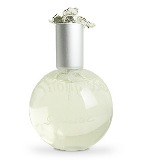
The French perfumer Cava Parfums, launching its own line of viniferous fragrances called Chateau Roxane packed in a wine bottle.

Le Boise


Taking inspiration from the oak barrels used to age Bordeaux wine, this resolutely masculine scent is built on a rich blend of woods. Deep and resonant, with a dash of spice. The packaging takes its cue from Bordeaux tradition, as well, right down to the red capsule.

Le Boise notes
woods, spices, vanilla

Sauvignonne


The irrefutable elegance of a classic dry white Bordeaux—light and brilliant in the glass, tart and crisp on the palate. A bold burst of grapefruit is blended with aromatic box tree and the gentlest hint of white peach to a create this sophisticated fragrance. Gloriously fresh.

Packaged in a beautiful hand-sewn velvet satchel.

Sauvignonne notes
grapefruit, box tree, white peach.

Botrytis


A lush autumnal fragrance inspired by the rich, honeyed sweetness of extraordinary Sauternes wines like the magnificent vintages of Chateau d’Yquem. Opulent, golden, voluptuous. A warm and velvety blend of honey, candied fruits, quince and pain d’epice that caresses the senses. Truly intoxicating.

Packaged in a beautiful hand-sewn velvet satchel.

Botrytis notes
honey, candied fruits, quince, pain d’epice, white flowers.

1270


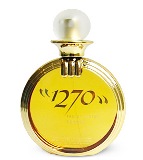
Named for the year the Frapin family established itself in the Cognac region of France (and continues to make cognac to this day), 1270 was created by Beatrice Cointreau, great granddaughter of Pierre Frapin. Together with Frapin's Cellar Master, she sought to create a noble fragrance full of the scents surrounding the creation of cognac. 1270 is dry, rich, velvety and smooth. The flowers of the once-proud Folle Blanche (a grape nearly extinct from the region), the vineyard grass, the wine warehouse, the rich smell of damp earth in the cellars, the wood of new casks, the loamy smell of humus where the ancestral cognacs are stored– all these notes can be detected in 1270. Gorgeous is putting it mildly... this scent defies flowery prose. A true masterpiece.

1270 notes
exotic woods, spice, raisin, vine flowers, pepper, candied orange, nut, hazelnut, prune, cocoa, coffee, leather, woods, white honey, vanilla


Picture of Chateau Roxane is from: http://mujer.terra.es/muj/articulo/html/mu24097.htm
Information and pictures from the other perfumes are from: http://www.luckyscent.com/

Friday, August 04, 2006

Sexy fragrances

What kind of fragrances are sexy, and why are they sexy? When thinking about sexy scents we think easily about the musk, civet and amber, the animal scents. They have a warm scent that reminds you of the warmth and smell of your own skin.

Animal scents have some similarity to human body odor. But we don't want to smell like body odor do we? We want to be clean and fresh but on the other hand we apply a scent that has some similarity to body odor, but in a different way. It's a subtle odor mixed with the most beautiful scents of flowers, fruits and woods.

A perfume that's made without some animal scents misses the warmth, it could easily smell like an air freshener it's as it don't fit or mix with your skin chemistry. A perfume made with some animal scents is like it's melting with your skin chemistry like the fragrance becomes one of your own.

The smell of flowers on the other hand could be very erotic as well. Some flowers have animal or body odor scents as well even if it is in small proportions. Like Jasmine has the aroma compound called Indole. But what someone finds sexy is also personal, some could like the soothing smell of vanilla for example, or just find the smell of fresh fragrances sexy because it smell like you just showered. Or what to think about sandal? Sandal has an aroma compound that is similar to the smell of the body odor of men Androstenol.

There are also perfumes with pheromones. Just as animals use scents to attract the opposite sex, we humans release pheromones and respond to the pheromones released by other people. Pheromones are naturally occurring chemicals in animals and humans which attract the opposite sex elicit sexual behavior. You can't actually smell pheromones but your body reacts on them. It's proven that people who have a smell disorder can have sexual problems. So smell is important for our sexual behavior.

I think that what someone finds a sexy smell isn't sexy for everyone. It's all about the personal memories, emotion, thoughts and gender. The most sexy perfume to me is Must de Cartier, what is your most sexy fragrance?